

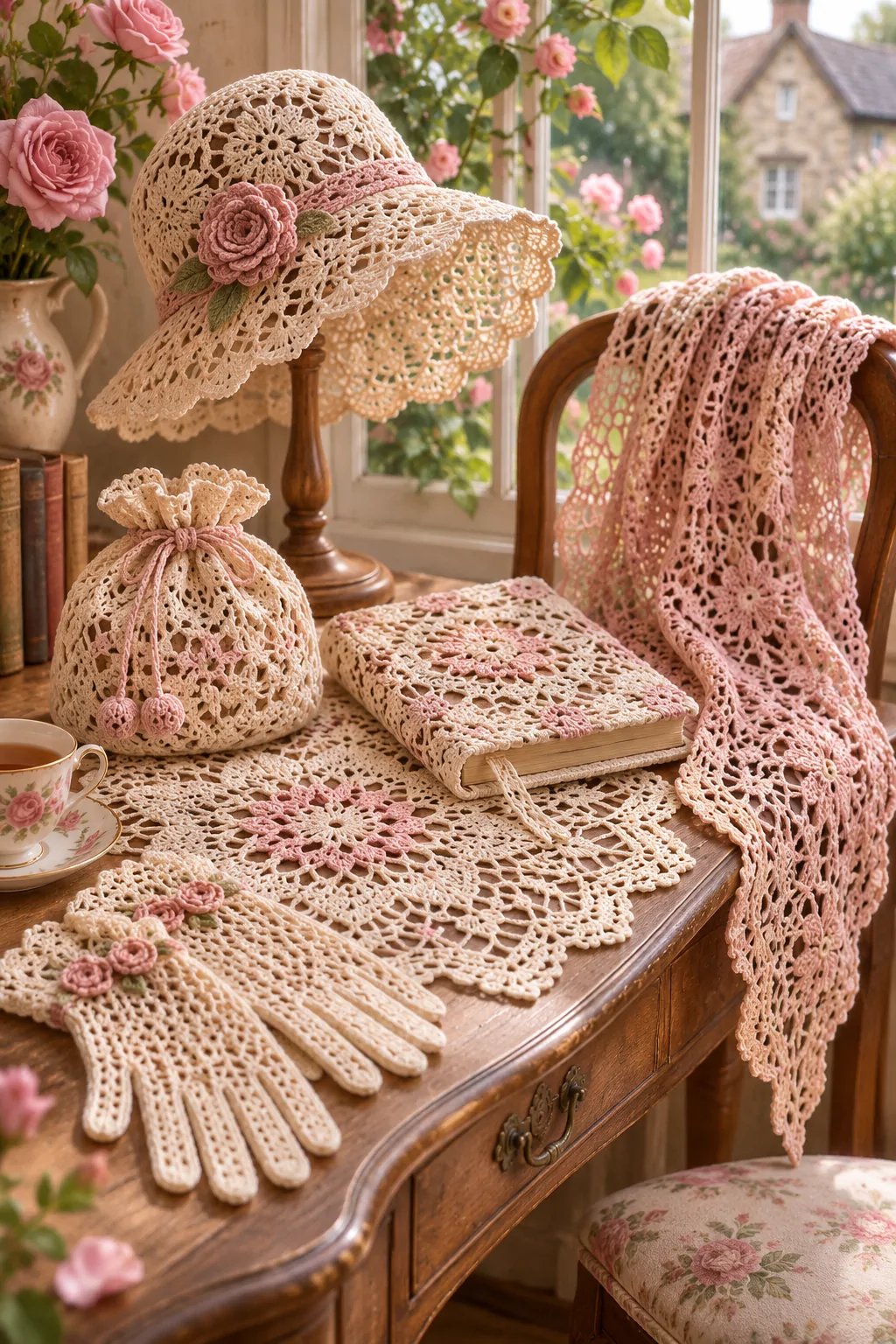
These crochet lace patterns make handmade texture feel special without asking every project to become a full heirloom. Inspired by the source title Whimsical Lace – Ideas and Free Crochet Patterns, this guide follows eight distinct directions, from flowing wave fabric and geometric squares to shawls, garments, blankets, and petite cuffs. The common thread is openwork: airy enough for light, detailed enough to reward a slow look, and flexible enough to suit both a confident maker and someone returning to lace after a break.
Crochet lace patterns begin with Wave Whisperer
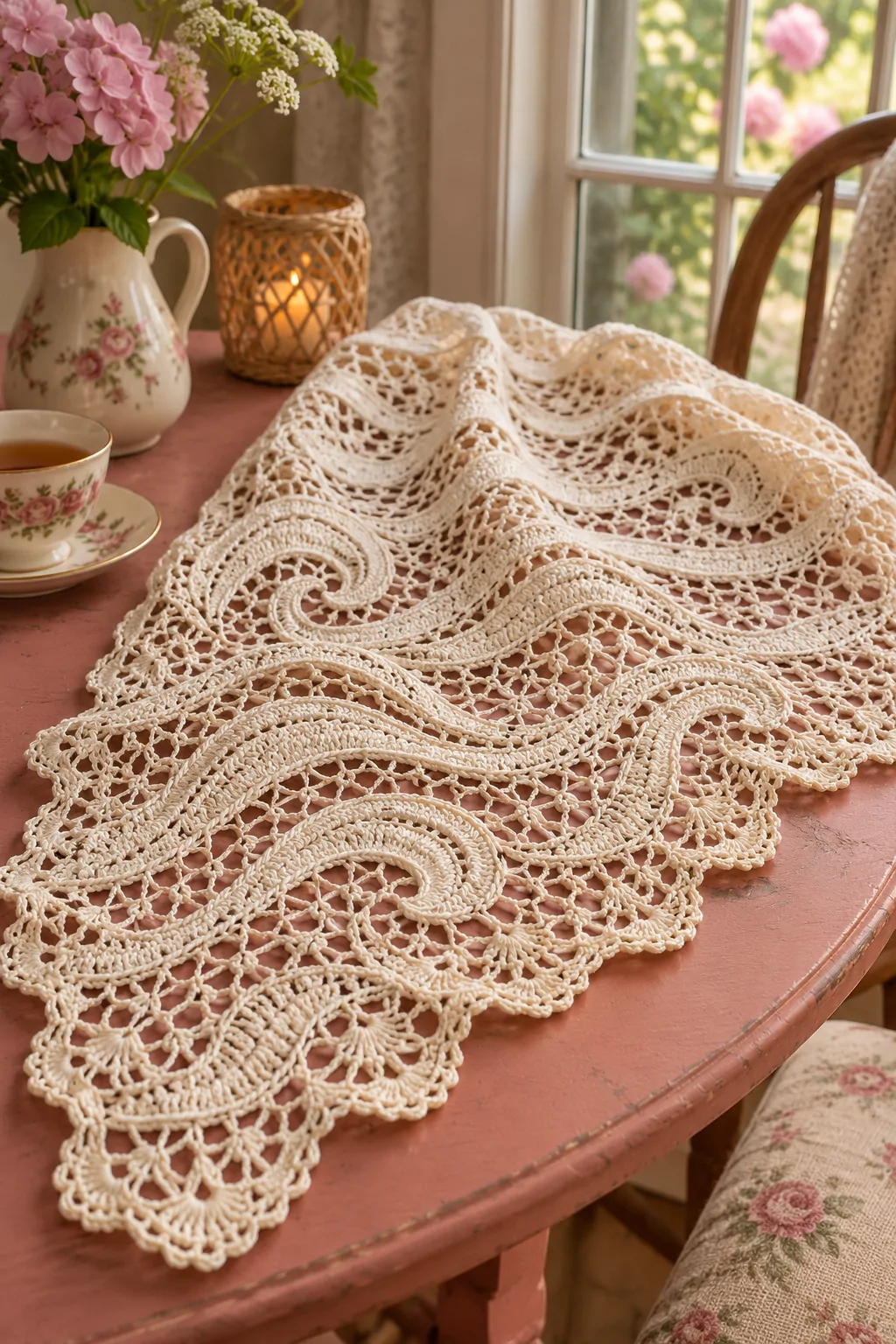
Wave Whisperer is a natural place to begin because the eye can follow the movement immediately. Flowing wave motifs give a wrap or panel an active surface while keeping the overall fabric light. Choose a calm cream, blush, or soft sage so the curves remain easy to read. Before committing to a large piece, make a generous swatch and block it gently. Lace often changes character after blocking, and the final openness will help you decide whether the yarn and hook create the drape you want.
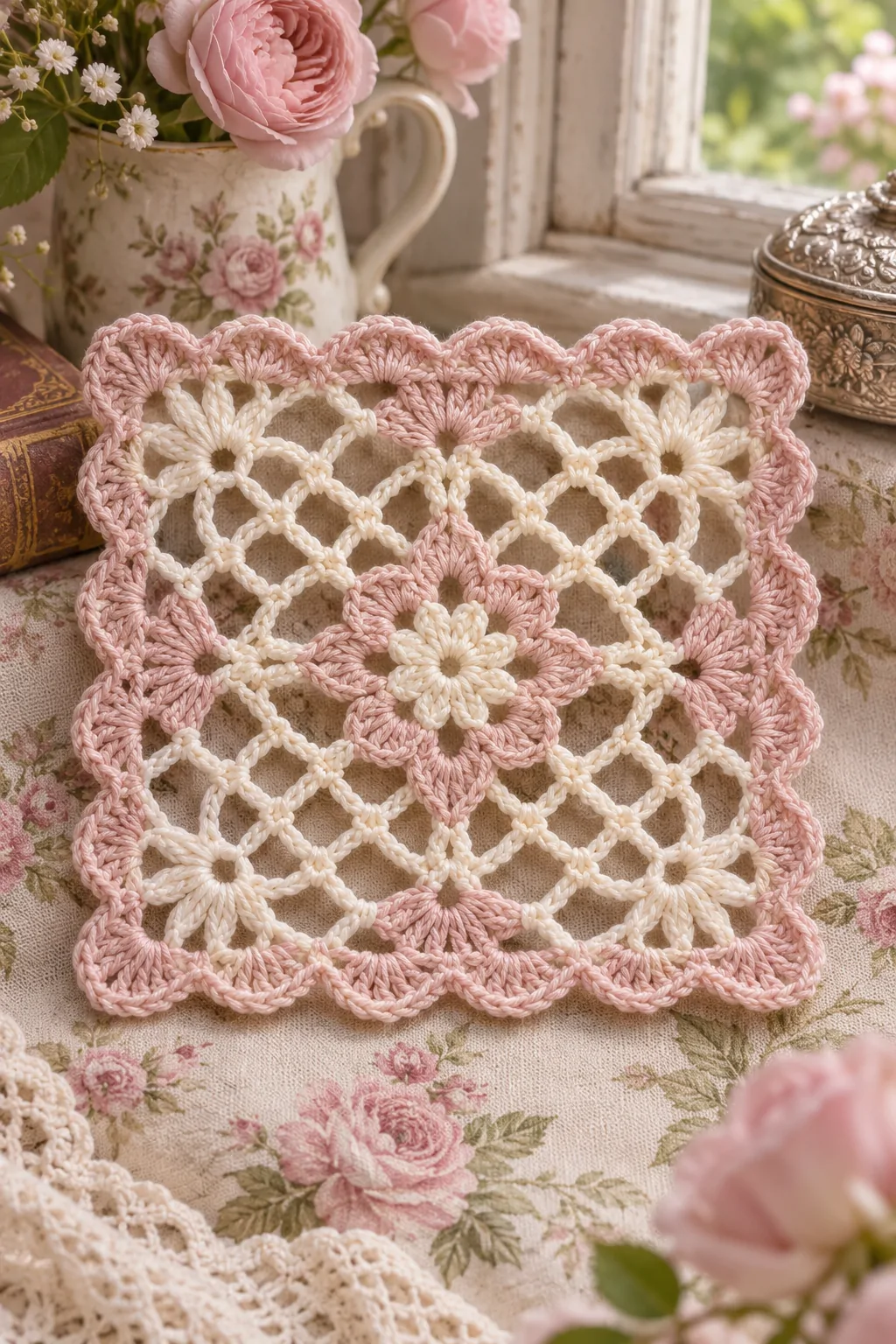
Victorian Lattice Square: A Modular Start
An airy Victorian lattice square offers a manageable way to explore openwork. The motif can be repeated for a blanket, joined into a cushion, or finished as a single decorative textile. Modular crochet also makes color planning less intimidating because each square gives you a small, visible decision. Try one main shade with a gentle accent round, then lay several samples together before choosing a final arrangement. Clean joins and a consistent blocking size will matter as much as the motif itself.
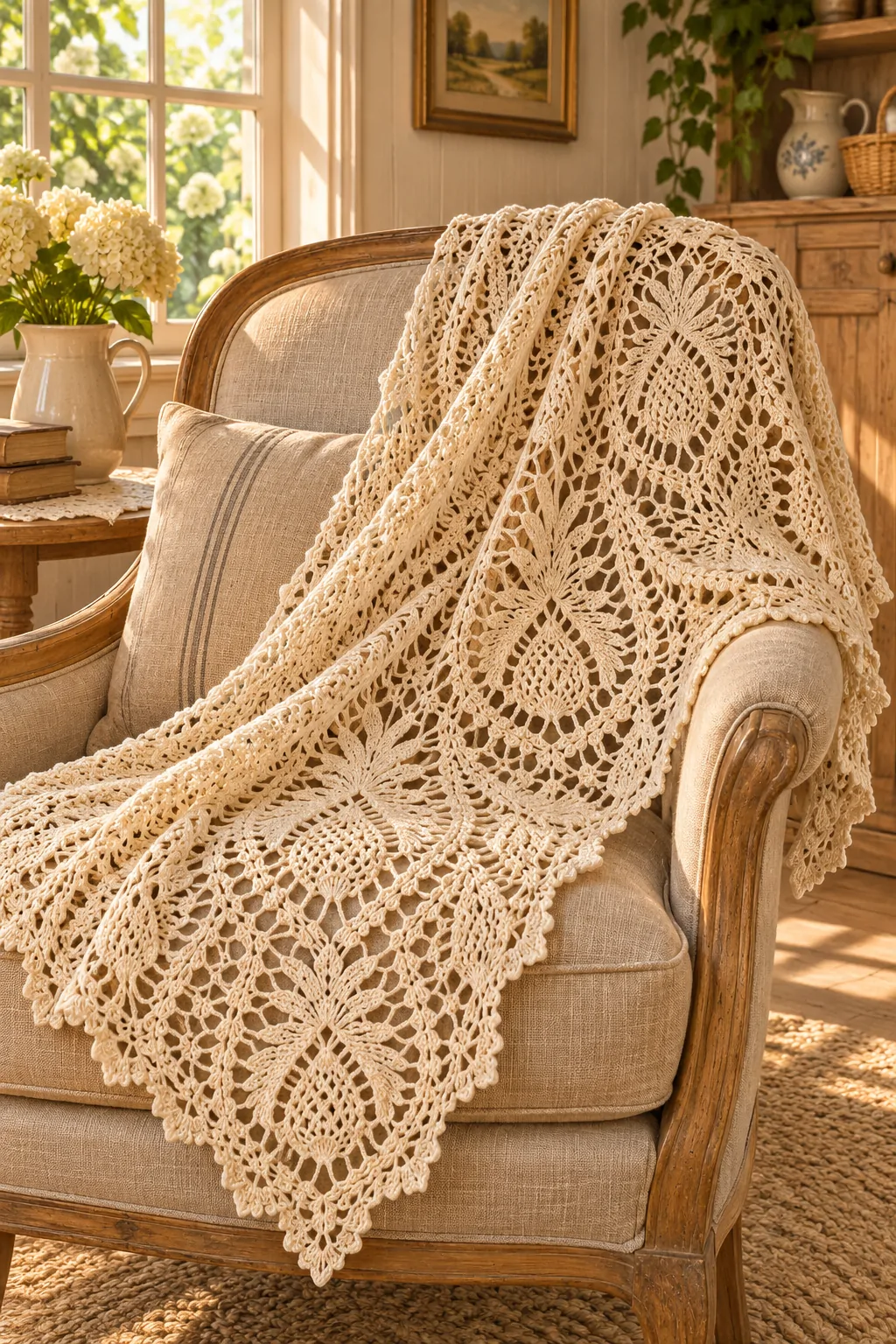
Lacy Pineapple Shawl: Statement Draping
Pineapple-inspired lace gives a shawl a romantic, vintage-leaning character. The motif looks especially graceful when the fabric is allowed to fall naturally from the shoulders, so yarn choice deserves attention. A smooth fiber makes the stitch definition clear, while a soft blend can add a little warmth and movement. Work a larger swatch than usual, measure it before and after blocking, and keep the finished dimensions in mind. A beautiful lace shawl is not only about the motif; it is also about how comfortably it folds, wraps, and settles.
Asta: Refined Openwork
Asta represents a polished garment direction for crocheters who enjoy a steady openwork repeat. Look for a clean outline and enough negative space for the lace to remain visible when worn over a simple layer. A restrained palette lets the structure speak, but a subtle tonal contrast can also emphasize the rhythm of the stitches. Pay attention to ease and finishing before you begin. Lace fabric may relax with wear, so a careful measurement plan and a blocked sample will help keep the silhouette graceful rather than unexpectedly loose.
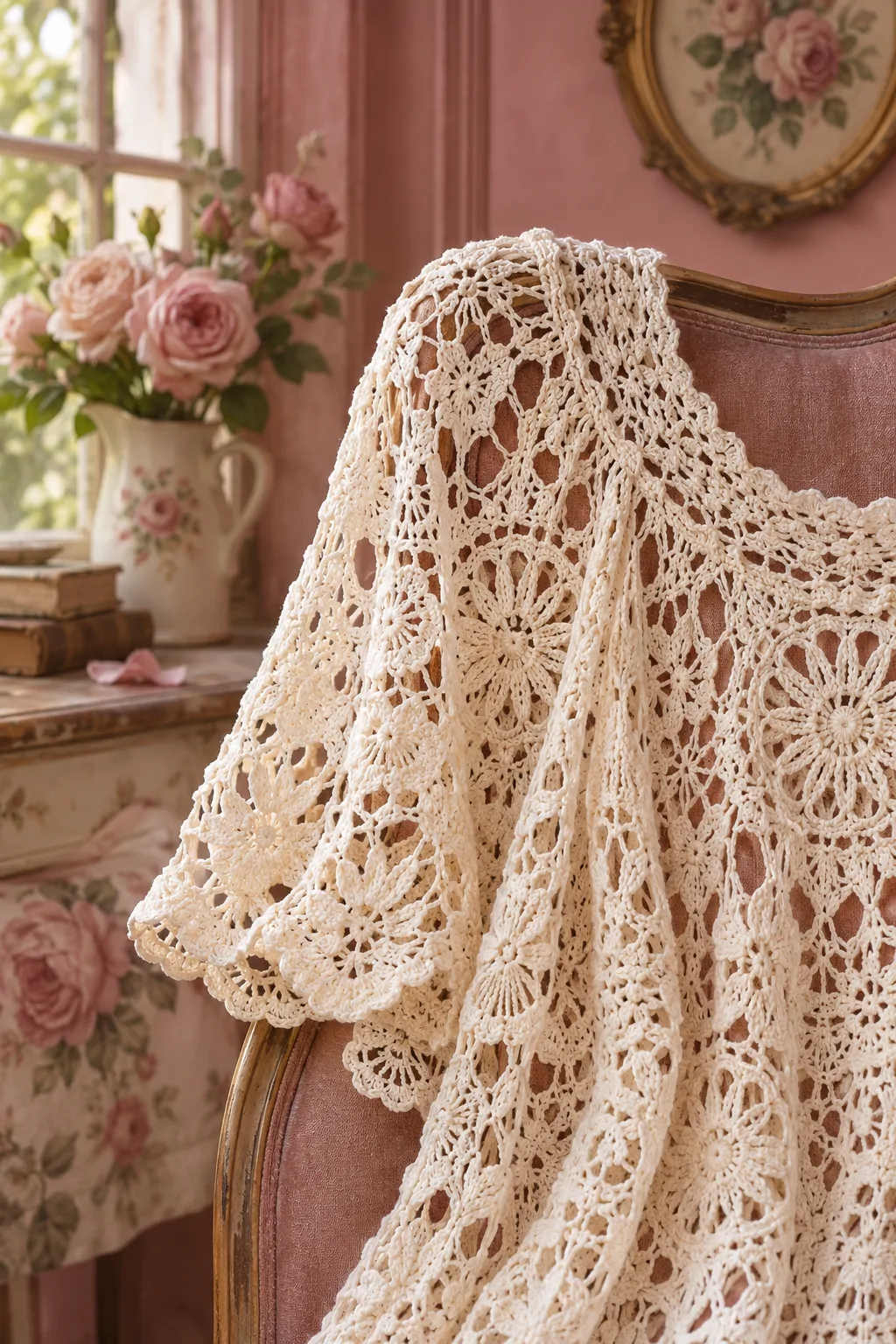
Lace Sleeves: A Romantic Detail
Lace does not need to cover an entire garment to make a memorable impression. Sleeves concentrate the openwork around the hands and forearms, where the texture can frame movement and soften a plain silhouette. This is also a useful project direction when you want to practice lace without taking on a full sweater. Compare the cuff width with a favorite sleeve, test the repeat around a small tube, and consider how the edge will behave when it meets a seam. Small construction choices make the finished detail feel intentional.
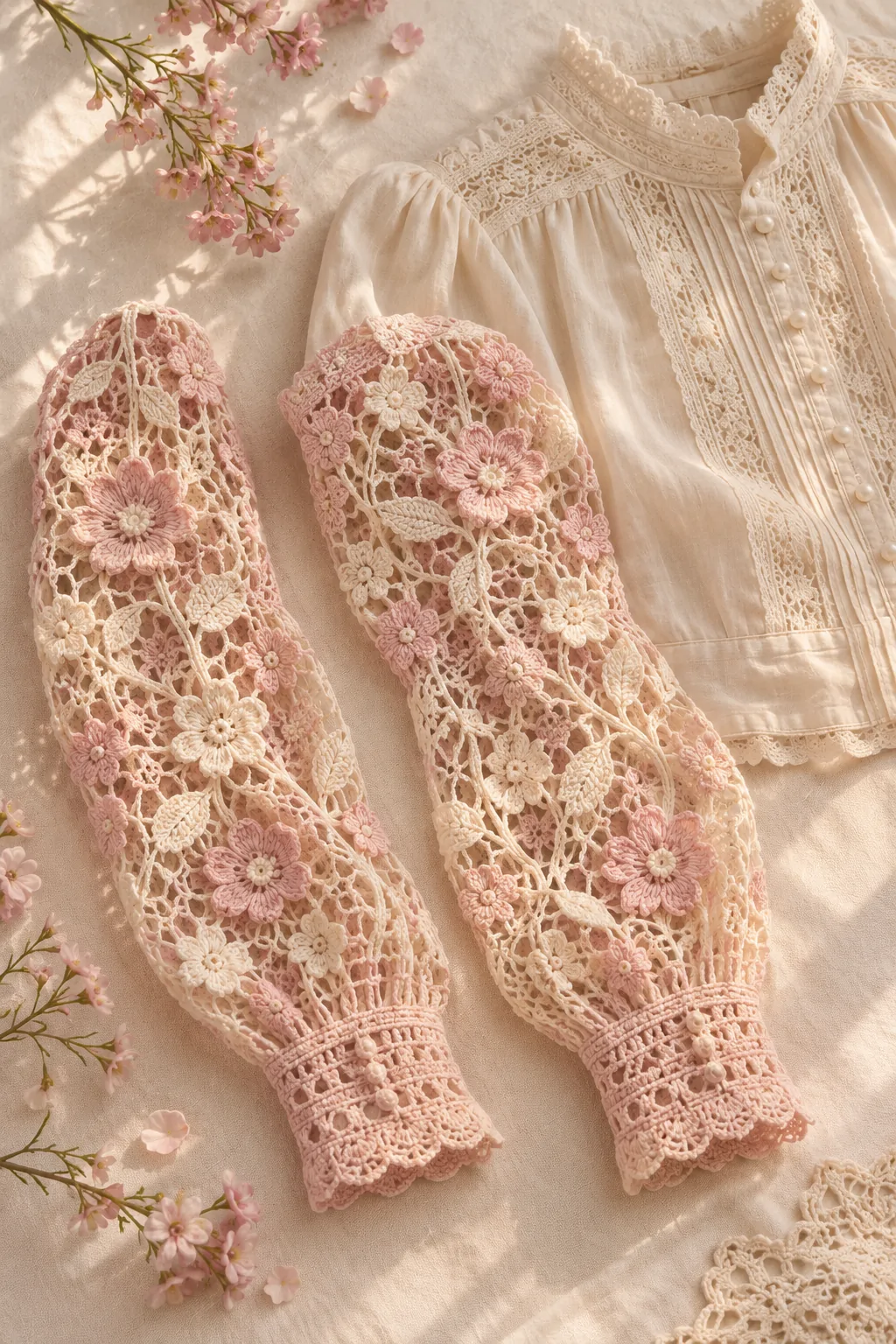
Tonnta Blanket: Waves at Home
Tonnta translates lace movement into a cozy home layer. A repeated wave rhythm lets a blanket grow gradually while tonal changes emphasize every sweep. This suits makers who enjoy a predictable repeat but still want a decorative fabric. Keep tension steady, mark the first repeats, and decide how the border will relate to the waves. A quiet edge can frame a lively center.
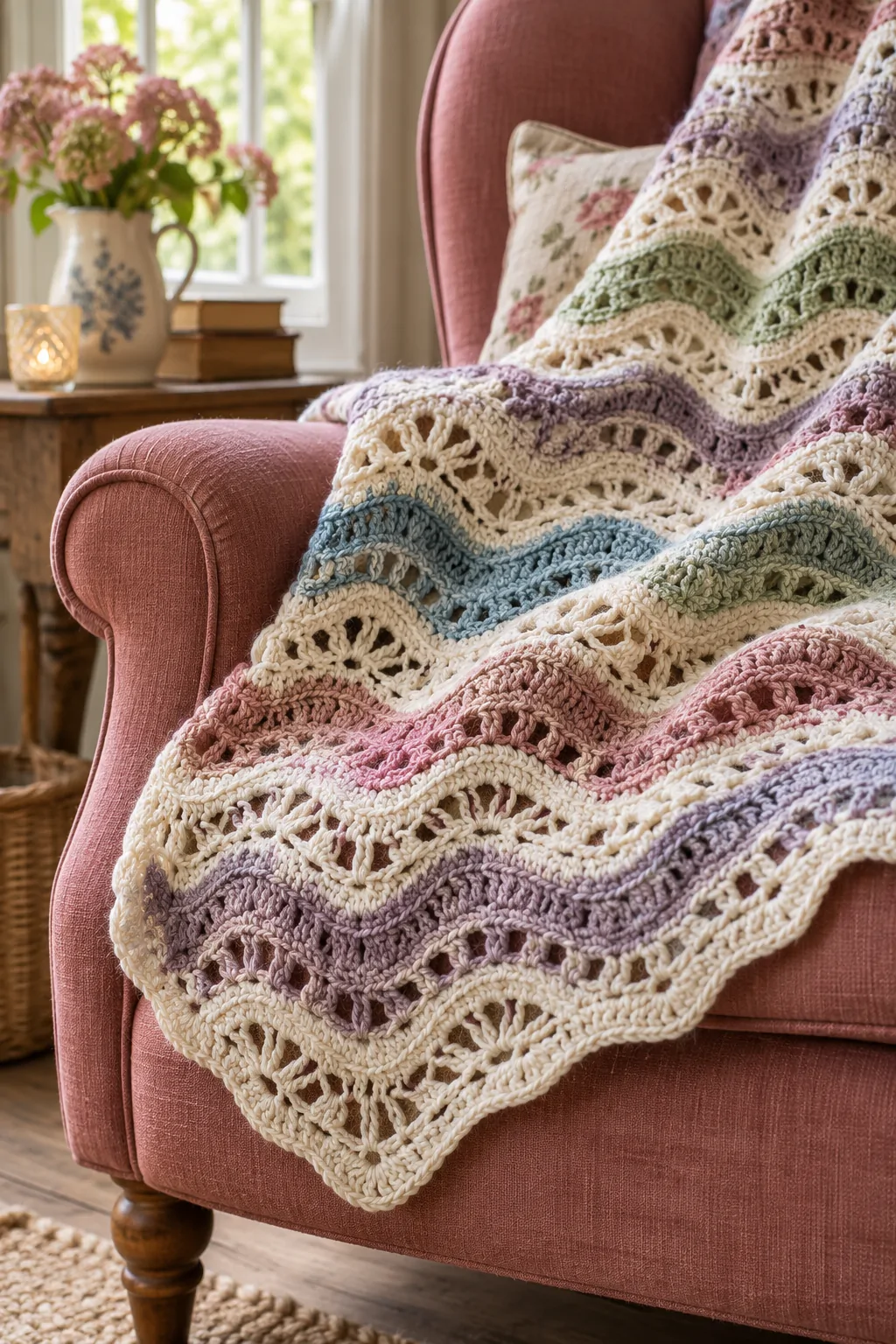
SisLove Blanket: Ornate Texture
SisLove provides a richer blanket direction when you want a decorative focal point. Ornate lace motifs can create a garden-like surface in ivory, rose, and muted green. Balance the center with a simple border so the eye has somewhere to rest. If the project includes many repeats, organize yarn and notes in a dedicated basket. Photographing each section makes progress easier to see.
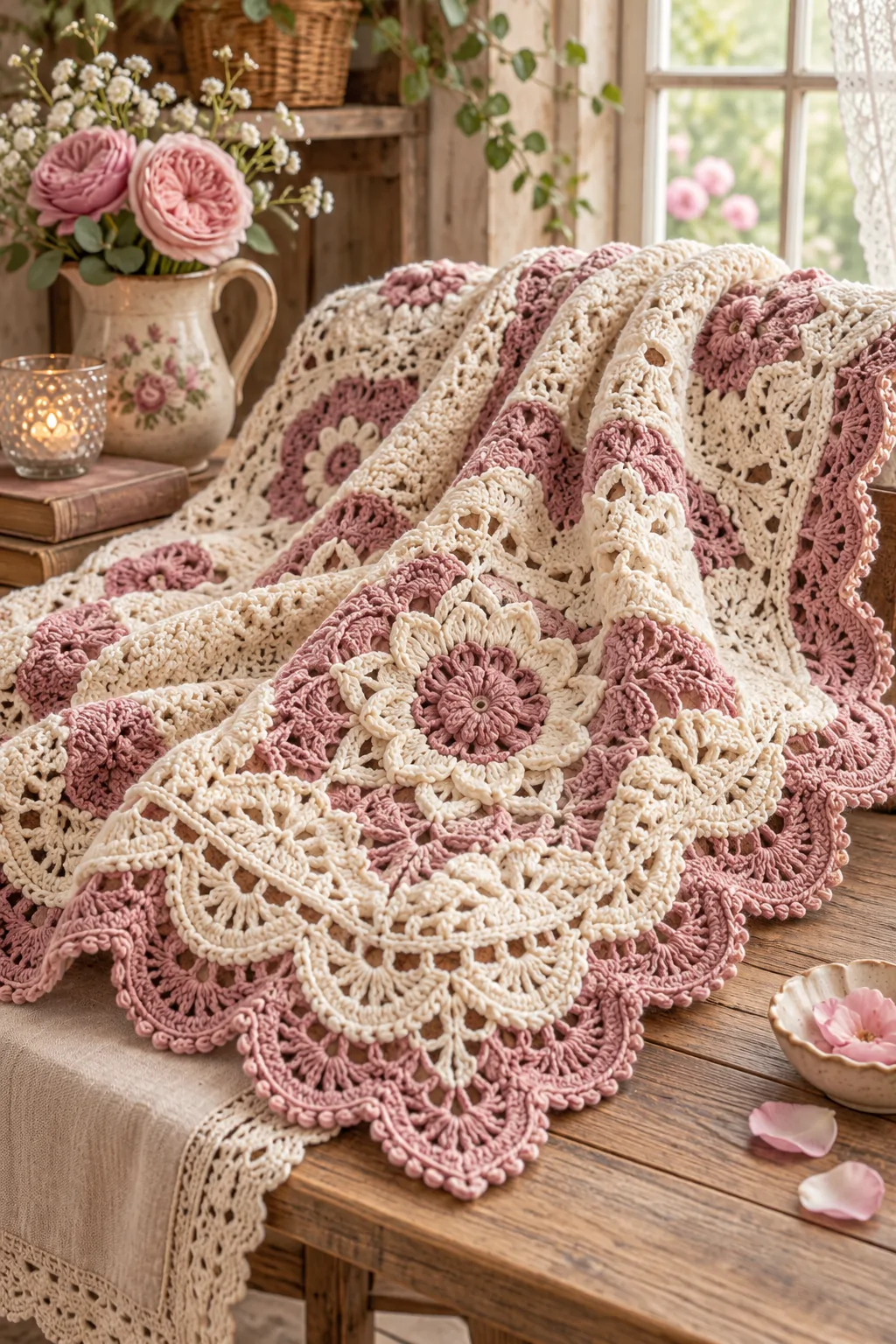
Lace Cuffs: Small Projects, Big Finish
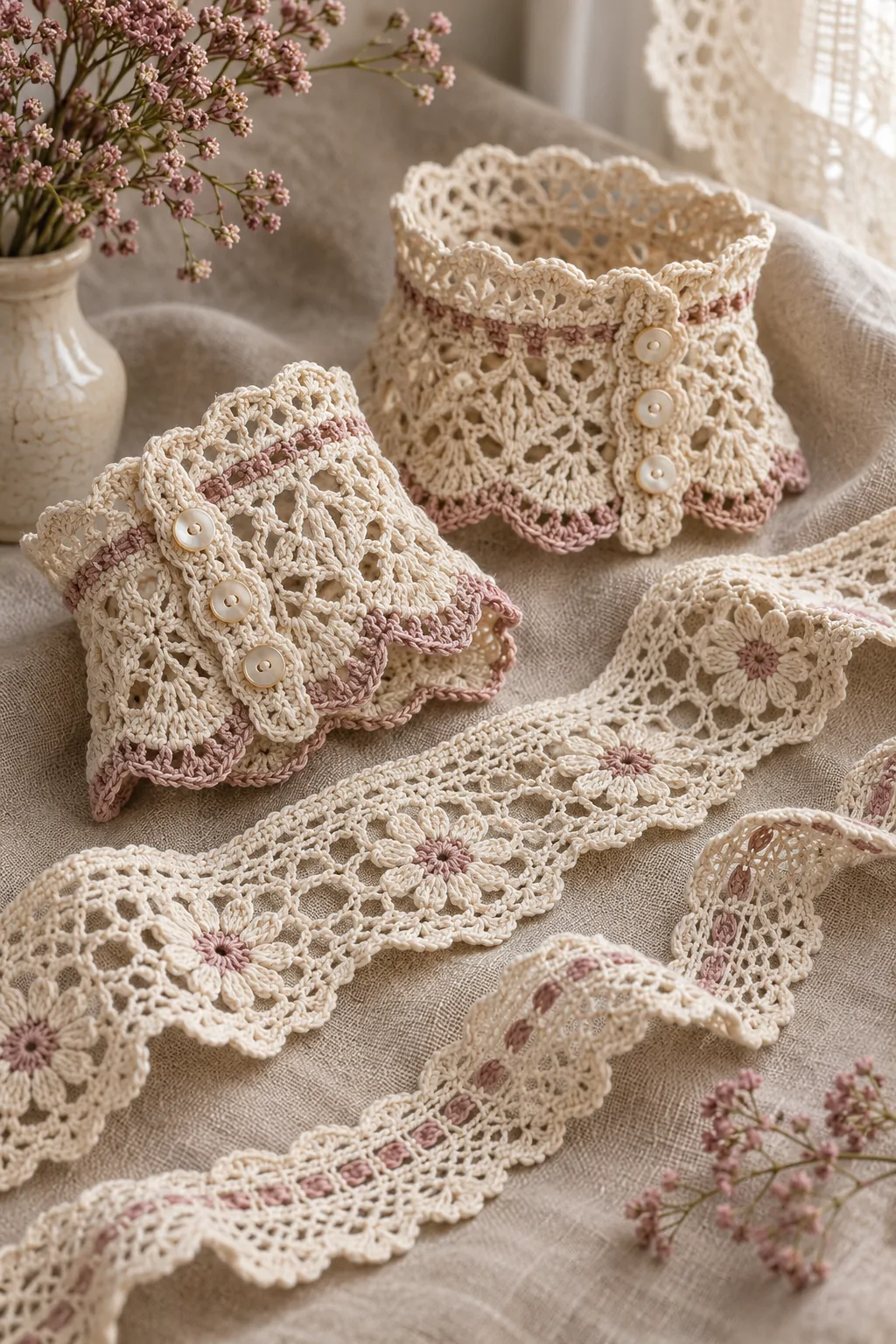
Lace cuffs and vintage-inspired trims suit a shorter making session. They can refresh a plain sleeve, add a period note to an outfit, or become a thoughtful gift. Because the project is small, finishing quality is visible. Block the cuff flat, check that edges mirror one another, and choose a comfortable closure. Crochet lace patterns do not need to be large to be satisfying; a carefully made accent can still feel special.
Choose the lace experience you want
Pick your next project by the experience you want from the making time. Choose modular squares when you like repetition and visible milestones, a shawl or sleeve when drape and wearability matter, a blanket when you want a longer rhythm, or cuffs when you need a compact finish. In every case, swatch the openwork, block a sample, and let the yarn guide the final scale. The most successful lace project is the one whose beauty fits your actual routine, leaving enough room for careful stitches and the pleasure of making.
