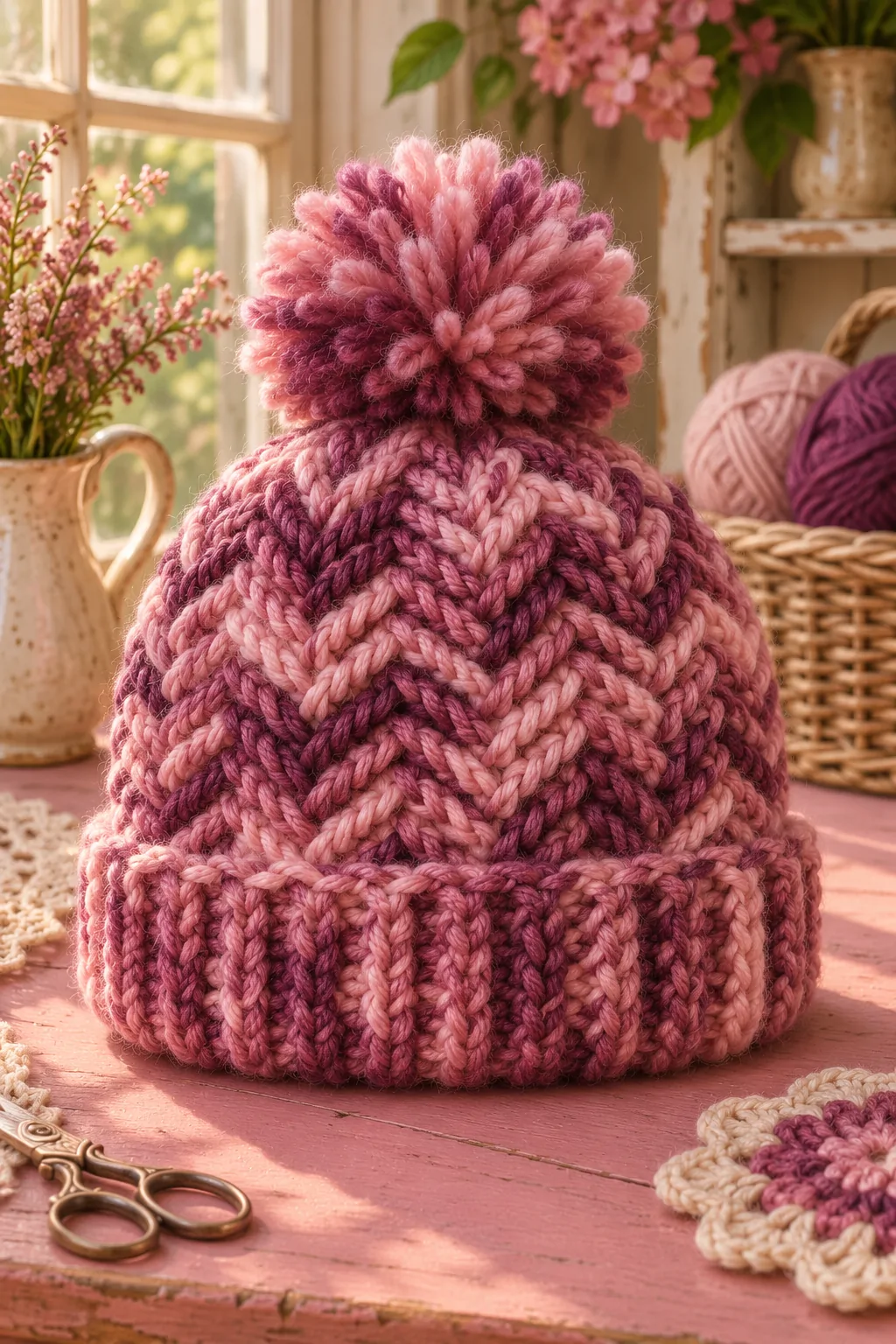
The Brisa Herringbone hat is an inviting way to make a useful winter accessory without committing to a large project. This easy crochet beanie combines a directional textured body, a stretchy knit-look brim, and a soft yarn pom-pom. Because the design includes sizes from 0–6 months through adult, it can also become a thoughtful family project or handmade gift set.
A quick, textured beanie for every age
The design is presented as beginner-friendly, but its finished appearance has enough polish to suit an experienced crocheter too. The herringbone texture creates a slanted rhythm across the fabric, while the ribbed brim gives the lower edge a neat frame. Together, those details make a simple silhouette feel considered, warm, and easy to wear.
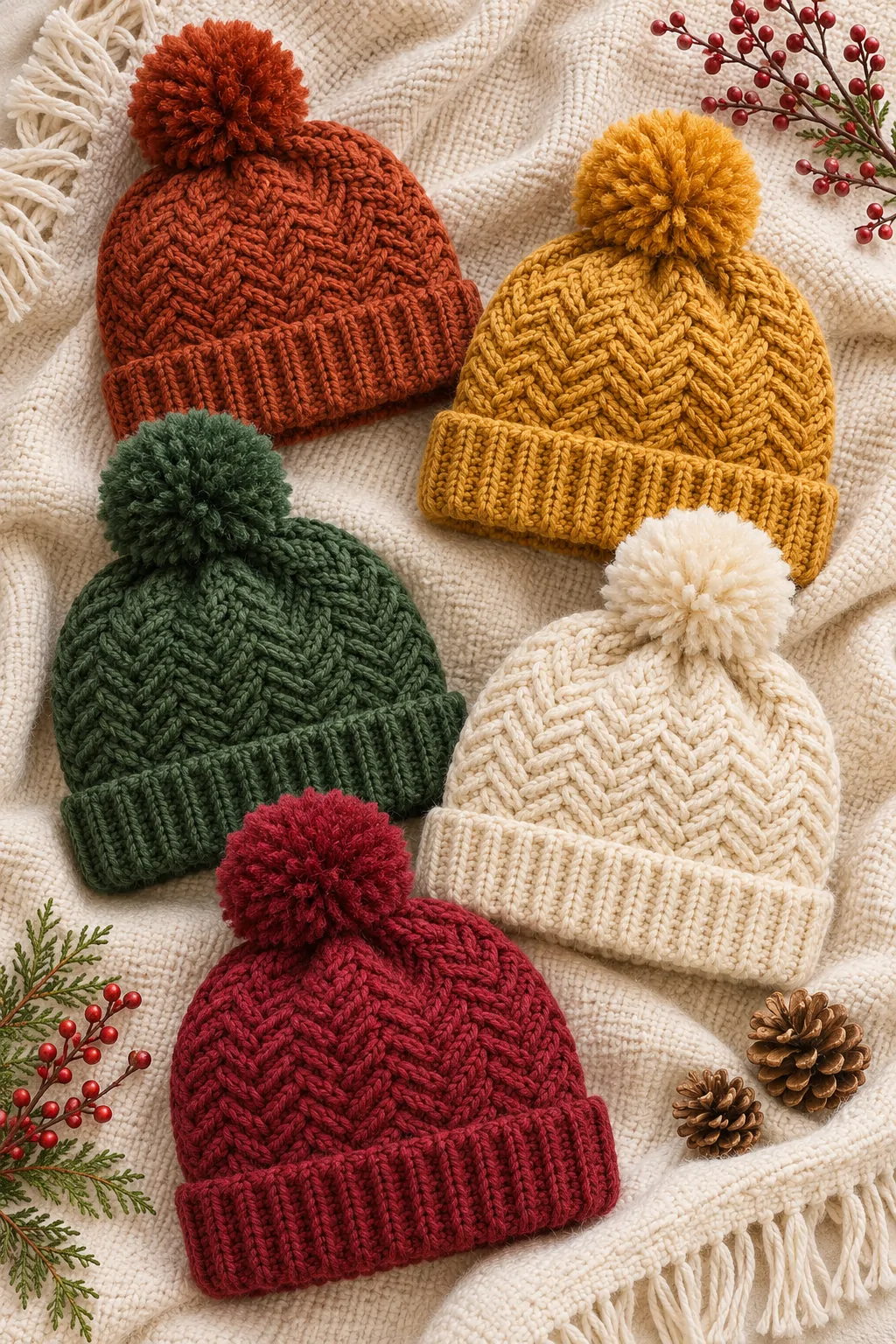
Five listed sizes make the pattern especially adaptable. The range begins with a 0–6 month size and continues through 6–12 months, toddler, child, and adult options. Measuring the intended wearer’s head before choosing a size remains important, because the final result depends on both the selected measurements and the crocheter’s individual tension.
What makes the herringbone texture stand out
Herringbone double crochet gives the main body a subtly angled surface that feels more dimensional than a plain fabric. It has a woven quality without demanding a complicated colorwork chart, so variegated yarn can remain visible. The stitch also creates a modern look that works with both soft neutrals and lively winter color changes.
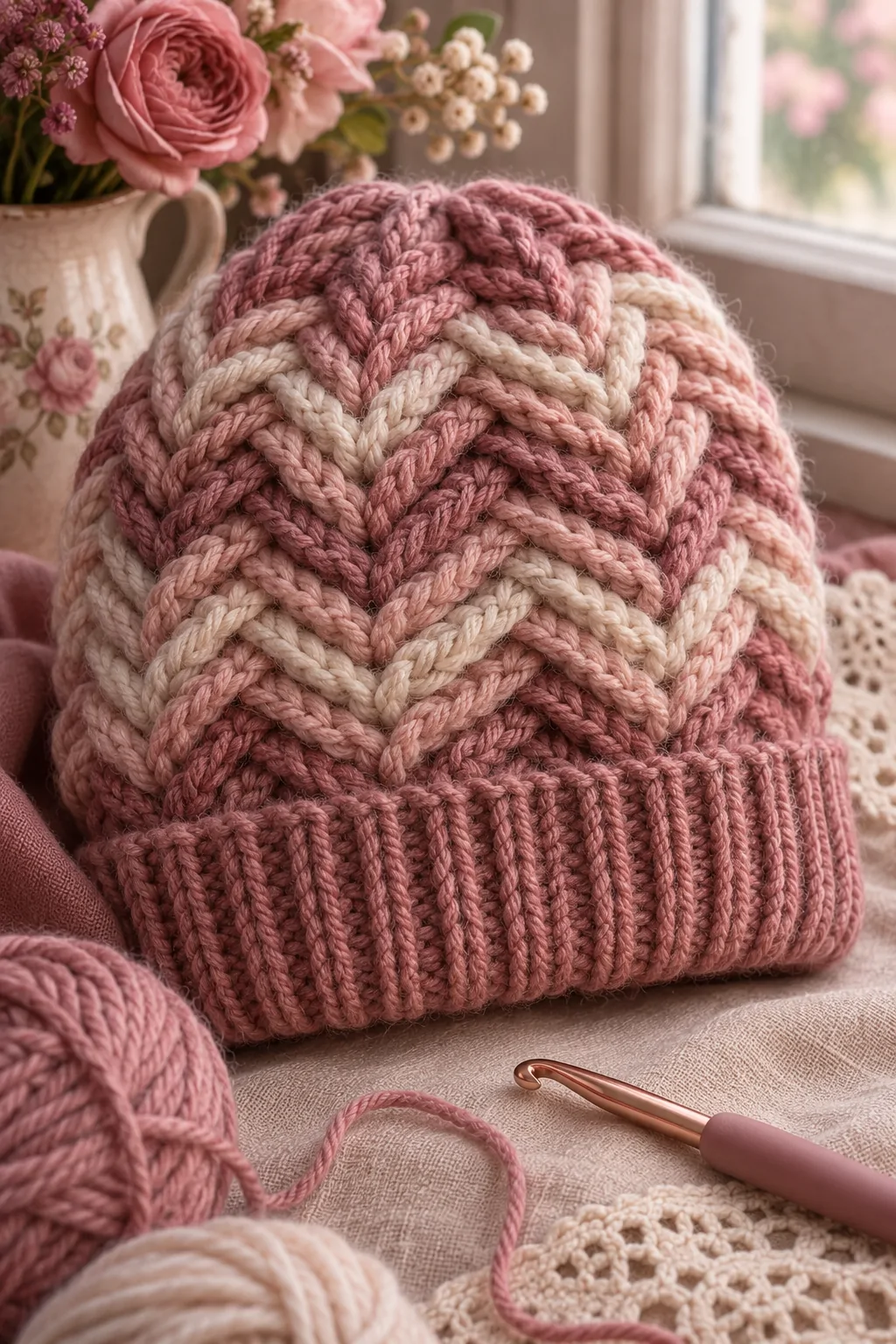
The brim is a useful counterpoint to that texture. Alternating half double crochet and slip stitches worked in the back loop form a stretchy band with a knit-inspired appearance. It anchors the hat around the head and gives the body a clean starting line, which helps the finished piece look structured even when the yarn is plush.
The surface and brim also offer a practical visual guide while you work. The band should read as a compact ribbed section, while the body should show the repeated diagonal movement of the herringbone stitch. Keeping those roles distinct makes it easier to notice whether your tension is changing as the project grows.
Choosing yarn, hook, and fit
The sample uses Katia Azteca, described as a bulky weight yarn made from 53% wool and 47% acrylic. The source lists approximately 197 yards per 100 gram ball, and its natural color transitions can create a lively hat without frequent yarn changes. That quality is useful when you want visual interest while keeping the construction straightforward.
An 8 mm hook is listed, with a body gauge of 9.5 stitches and 6 rows over 4 inches in herringbone double crochet. A substitute bulky yarn may be possible, but matching the gauge and fabric drape matters more than buying the same number of balls. Fibre content, yardage, and stretch can all change the final fit and hand of the hat.
Gauge is particularly important for a close-fitting accessory. A small swatch can show whether your stitches are producing the expected density before you invest time in a complete size. If the fabric is too firm, too loose, or visibly different from the intended texture, changing hook size may be more useful than simply changing the number of rounds.
How the hat comes together
The hat is worked from the bottom up. The ribbed band is made first and joined, then the body continues in joined rounds of herringbone double crochet. Crown decreases shape the top, and a yarn pom-pom completes the piece. This progression is easy to understand because every stage has a visible purpose: stretch, warmth, shaping, and finish.
A step-by-step video tutorial is included with the source design and demonstrates the smallest size. That can be helpful when a crocheter is learning how the herringbone stitch moves or how the crown decreases change the shape. Once the construction is familiar, the same overall sequence can be applied to the other listed sizes.
Ways to personalize the finished hat
Length is one of the clearest style choices. Working fewer rounds before the crown shaping can create a shorter, classic beanie, while adding rounds can encourage a relaxed slouch. The fit should still be checked against the intended head measurement, but this adjustment lets the same design move between a close everyday accessory and a softer weekend silhouette.
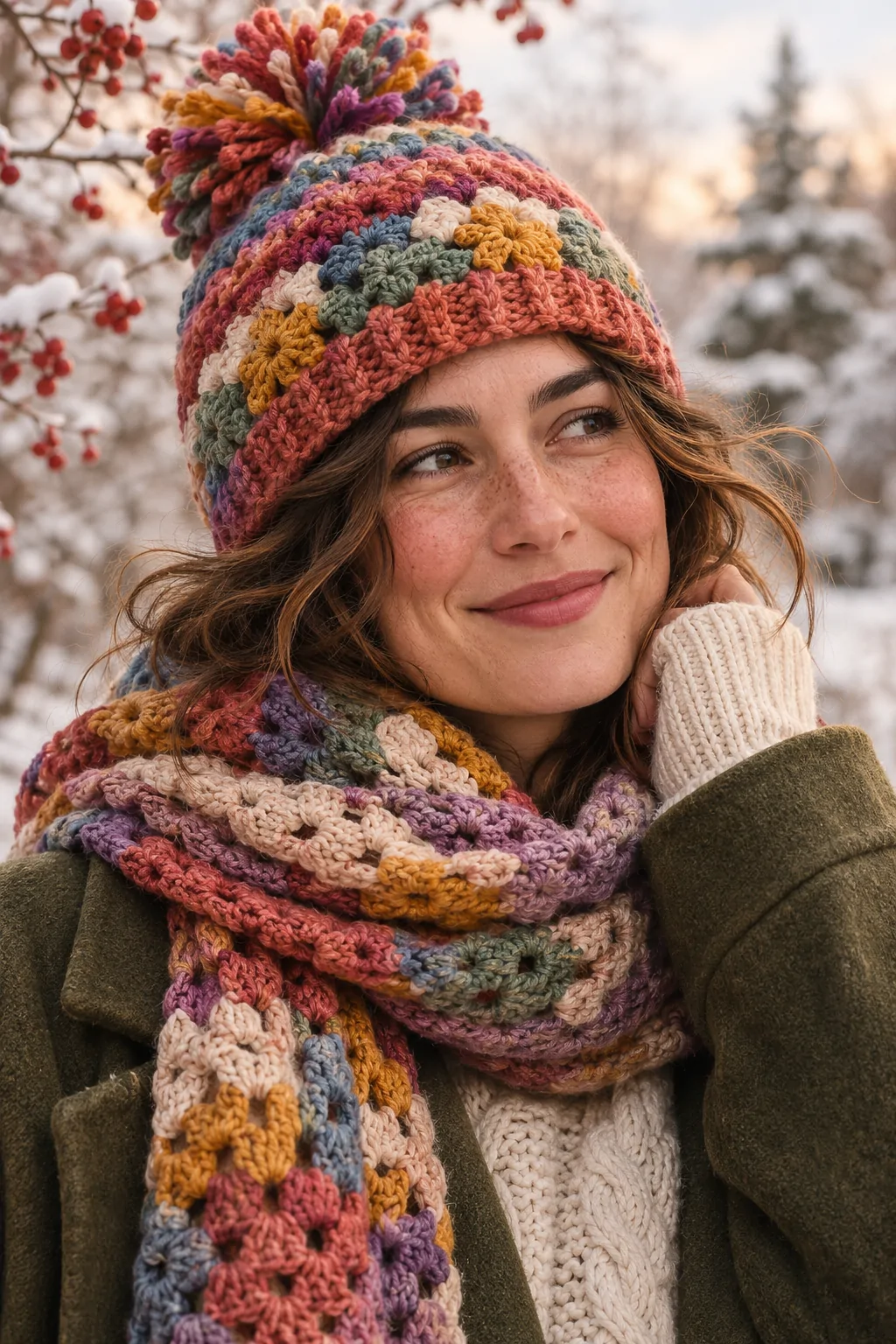
The pom-pom can change the mood too. A fluffy yarn pom-pom keeps the finish fully handmade and coordinates naturally with the hat’s color. A faux-fur pom-pom offers a different texture and a more pronounced winter accent. Either option can work as long as it is attached securely and suits the weight of the finished fabric.
Color is another easy way to make a family set feel individual. The same herringbone texture can look calm in a single shade, playful in a variegated yarn, or coordinated when several hats share a palette. Matching the hat with the related scarf, poncho, or fingerless gloves can create a thoughtful winter collection without requiring every piece to be identical.
Helpful answers before you begin
The Brisa herringbone hat is a good choice when you want a project with a clear silhouette and a visible stitch lesson. It is presented for beginners, includes five sizes, and can be completed relatively quickly depending on size and pace. The most useful preparation is to measure the head, check gauge, and choose a yarn that supports the intended stretch.
If you substitute yarn, look beyond the label name. Compare the weight, fibre content, yardage per gram, and the way the yarn drapes after a small swatch. A substitute that technically says bulky may still create a different fabric. The goal is a warm, flexible hat whose brim stretches comfortably and whose body keeps the herringbone texture legible.
FAQs about the Brisa herringbone hat
Is this suitable for a first crochet hat?
The source presents the design as beginner-friendly. It is most approachable for someone who knows basic crochet stitches and is ready to practice a textured stitch, joined rounds, and simple crown shaping. A small swatch and patient pace make the first attempt easier to understand.
How many sizes are included?
Five sizes are listed, from 0–6 months through adult. Measure the head and check your gauge before selecting the size so the finished hat has the intended fit. This preparation is useful for children and adults because small tension changes can affect a close-fitting accessory.
Can the hat be made slouchy?
Yes. The design allows a fitted or slouchy result, and length can be adjusted by changing the number of rounds worked before the crown decreases. Add rounds for a relaxed profile or work fewer rounds for a shorter classic beanie.