Crochet leaf coasters are a simple way to bring autumn texture to an everyday table. This guide uses the source roundup’s leaf and pumpkin direction as a starting point, then turns it into practical editorial advice about silhouette, color, scale, and placement. The goal is not to copy a pattern or promise a single construction method. Instead, it helps you recognize what makes seasonal crochet coasters feel coordinated, useful, and comfortably at home in a rose-cottage setting.
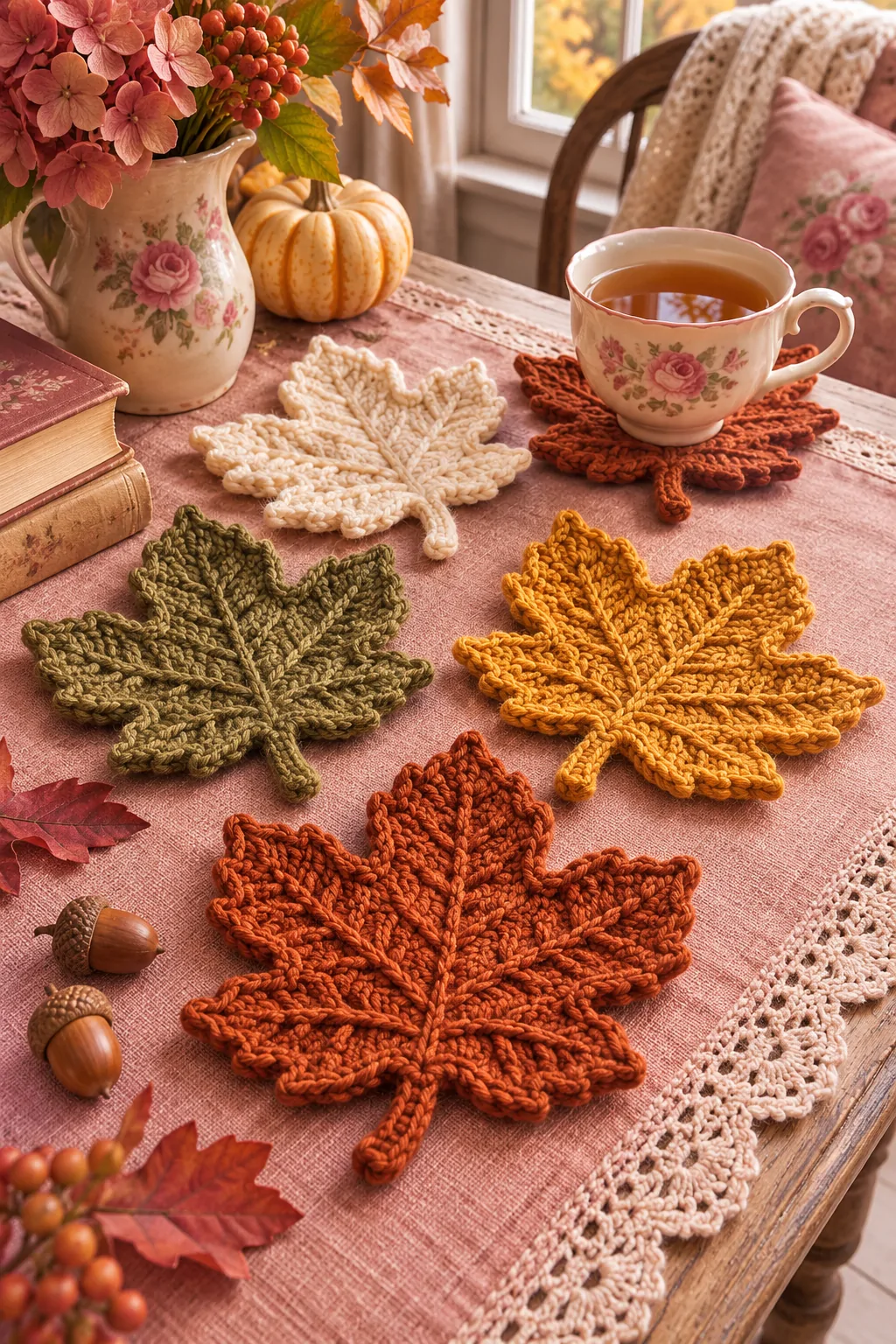
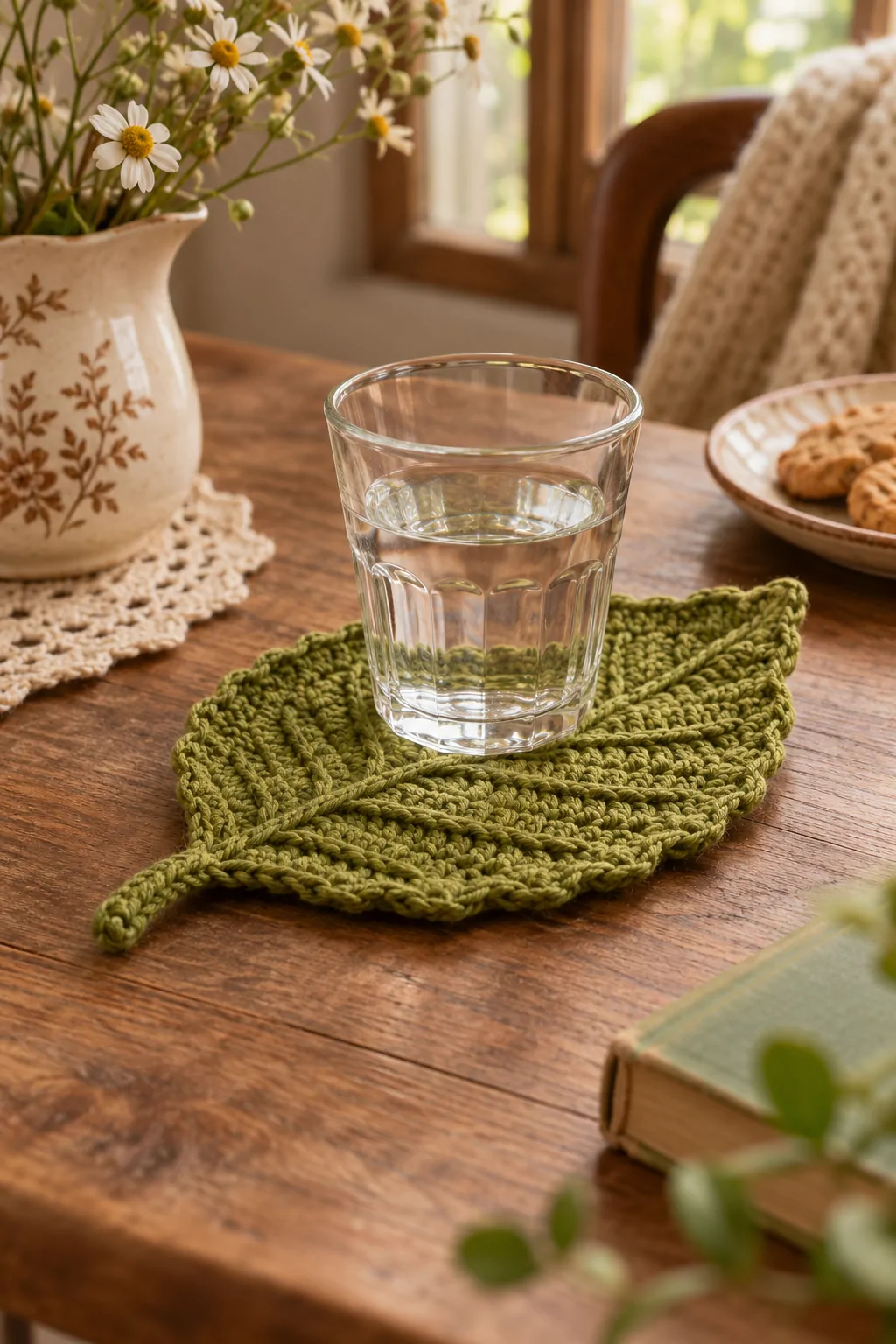
Begin with the outline. A maple-like leaf has a recognizable point and branching edge, while a rounded leaf feels softer beneath a mug. Look for a silhouette that leaves a stable center under the cup and enough edge definition to keep the motif readable. If the coaster will be used often, a compact shape is easier to wash and store. A larger decorative leaf can sit beside the mug as a small place accent.
Color does much of the seasonal work. Rust, pumpkin, ochre, olive, cream, and muted brown can share one arrangement without making it feel busy. Choose one anchor shade, then repeat it in a second motif or a small table detail. Cream yarn can soften a deep palette, while olive gives orange and gold a quieter partner. The strongest sets usually limit the main colors and let texture create the variation.
Crochet leaf coasters: leaf silhouettes
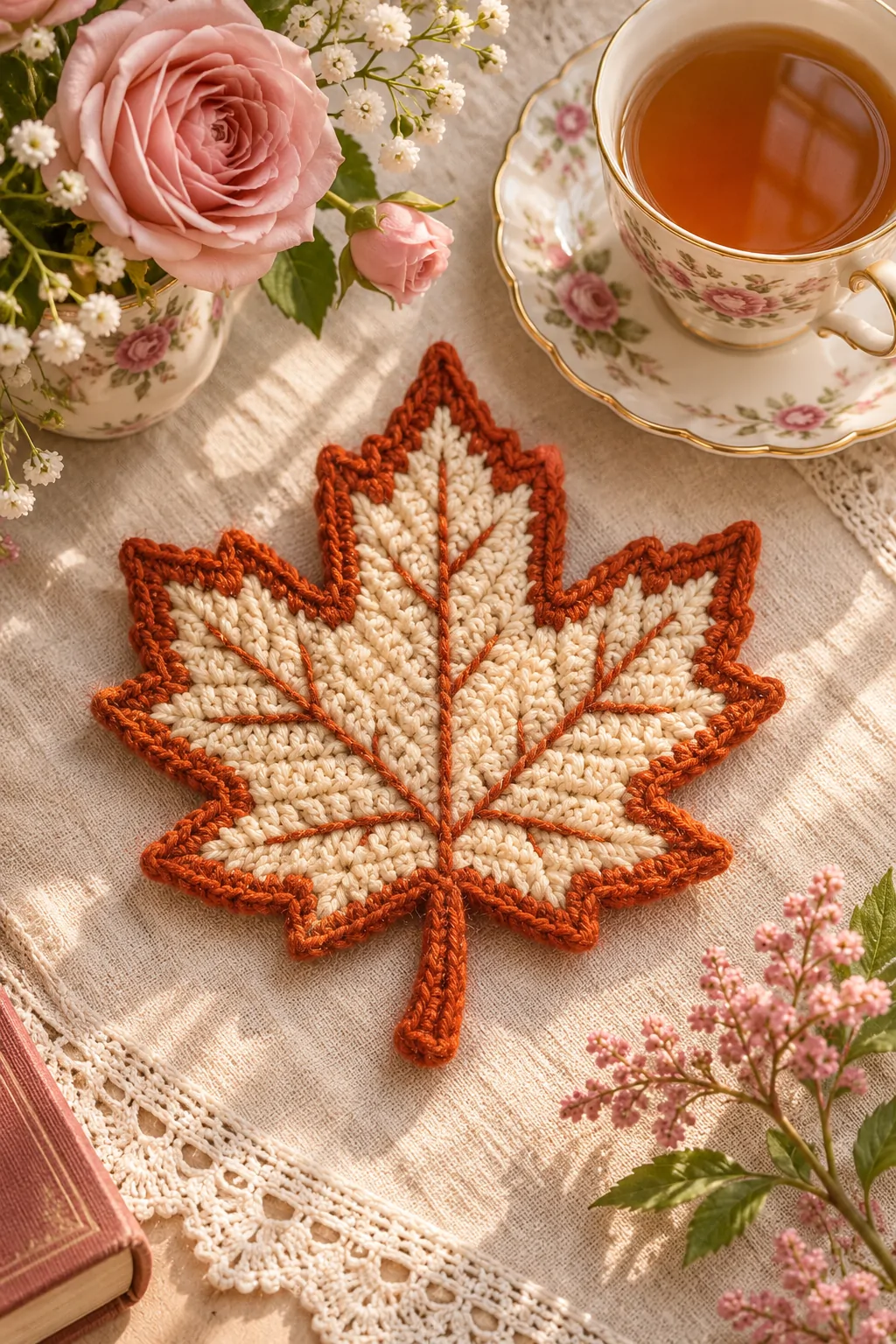
Use the source’s leaf emphasis as a visual cue rather than a strict formula. A broad maple-inspired form creates a clear frame around a cup, and a narrow leaf can fill a smaller space between dishes. Stitch definition matters because the outline is part of the decoration. If the center vein is raised or visually prominent, place the coaster so the cup does not hide all of the detail. A tidy edge also helps the shape remain recognizable after repeated use.
Pumpkin companions
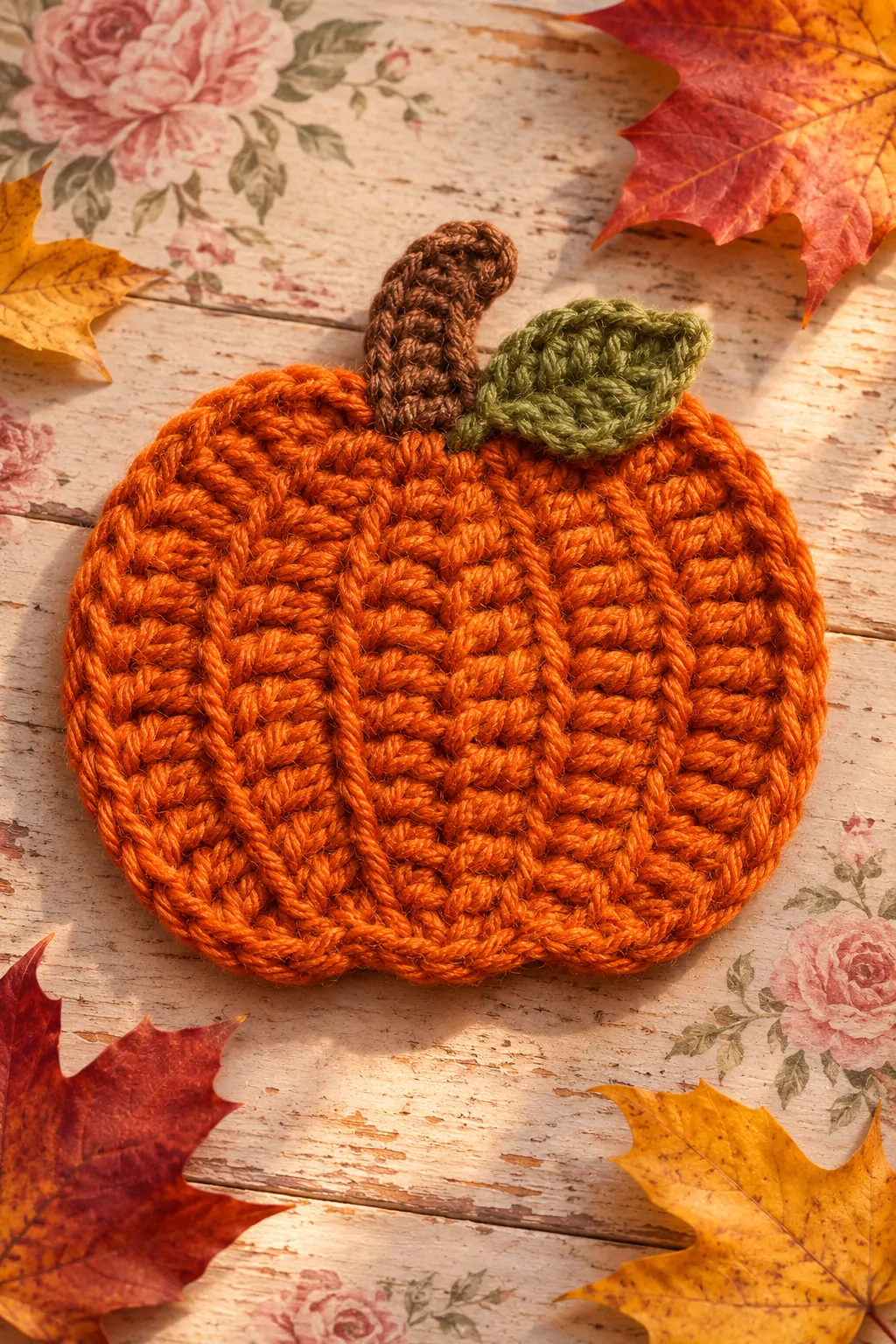
Pumpkin motifs make a natural companion to crochet leaf coasters because the two shapes tell the same harvest-season story. Keep the pumpkin smaller when it sits in the same grouping, or use it under an espresso cup and reserve the leaf for a larger mug. A small stem detail can be enough; the overall arrangement should remain useful rather than becoming a crowded centerpiece. Matching yarn weight and edge finish will make different motifs look like one collection.
Cottage styling
For a rose-cottage table, begin with a calm base such as linen, a woven runner, or a lightly patterned cloth. Add one floral cup, a small gourd, or a simple vase, then let the crochet texture carry the handmade character. The featured image suggests a layered seasonal mood, but the practical lesson is restraint: leave breathing room around each coaster so the leaf outline remains visible and the set can be used while guests are seated.
Planning a useful set
Before making or selecting several motifs, decide how many cups the set should serve and where it will be stored. Four matching leaf coasters are easy to stack, while a mixed set can feel more collected when one color repeats across every piece. Washable yarn is a sensible choice for a working table, and a firm fabric helps prevent a mug from rocking. Keep one finished coaster nearby as a scale reference when judging additional shapes.
Finishing details
Finishing details
Edges deserve as much attention as the central motif. A clean border can frame a textured leaf, reduce curling, and make the coaster easier to lift from the table. If a piece looks crowded, simplify the color sequence rather than adding more decoration. If it looks flat, change the surface texture or use a contrasting border. These small decisions preserve the source roundup’s cheerful seasonal spirit while giving the final set a more intentional appearance.
When comparing crochet leaf coasters, pay attention to the details that are easy to miss. A pointed tip can make a motif feel crisp, while a gently scalloped edge gives it a softer cottage character. The center line may be worked as texture, color, or simply suggested by the shaping. None of these choices is automatically better. The right choice depends on the cup size, the amount of contrast on your table, and whether the coaster is meant to be a quiet background or a conversation piece.
It also helps to think about the set as a small visual rhythm. Place the darkest shade at one end of the arrangement and repeat it near the center, or alternate warm and quiet colors so every piece has room to breathe. If the yarn is highly variegated, keep the silhouettes simple. If the yarn is solid, a more detailed leaf edge can provide interest. This kind of planning makes handmade crochet feel deliberate without taking away its relaxed charm.
Finally, keep the care routine in mind before committing to a finished palette. Coasters live close to spills, steam, and warm dishes, so a washable fiber and a shape that dries flat are useful practical choices. Store the pieces together once they are completely dry, and reshape a curled edge gently rather than pressing it aggressively. With those habits, crochet leaf coasters can remain part of the table through many autumn gatherings and return again when the season comes around.