Fit the cover to an insert you can measure
Measure the actual insert across the center and check its depth. Lay the washed front panel over it, then test whether the corners reach with only gentle stretch. If the pattern uses an envelope back, clip the back pieces together off the insert and measure how much overlap remains when they wrap over it.
A pillow that looks square on a shelf can still need room to curve over its filling. Check for gaps around bobbles and along the closure before joining the panels if the insert color could show through.
These crochet decorative pillow ideas bring the softness of handmade texture into a room without making the arrangement feel busy. Flowering motifs, leafy details, and gentle cottage colors can turn a simple cushion into a small focal point, while the right background keeps the piece comfortable to live with. Decide first whether the pillow should lead the palette or quietly echo colors already in the room.
Build crochet decorative pillow ideas around one focal motif
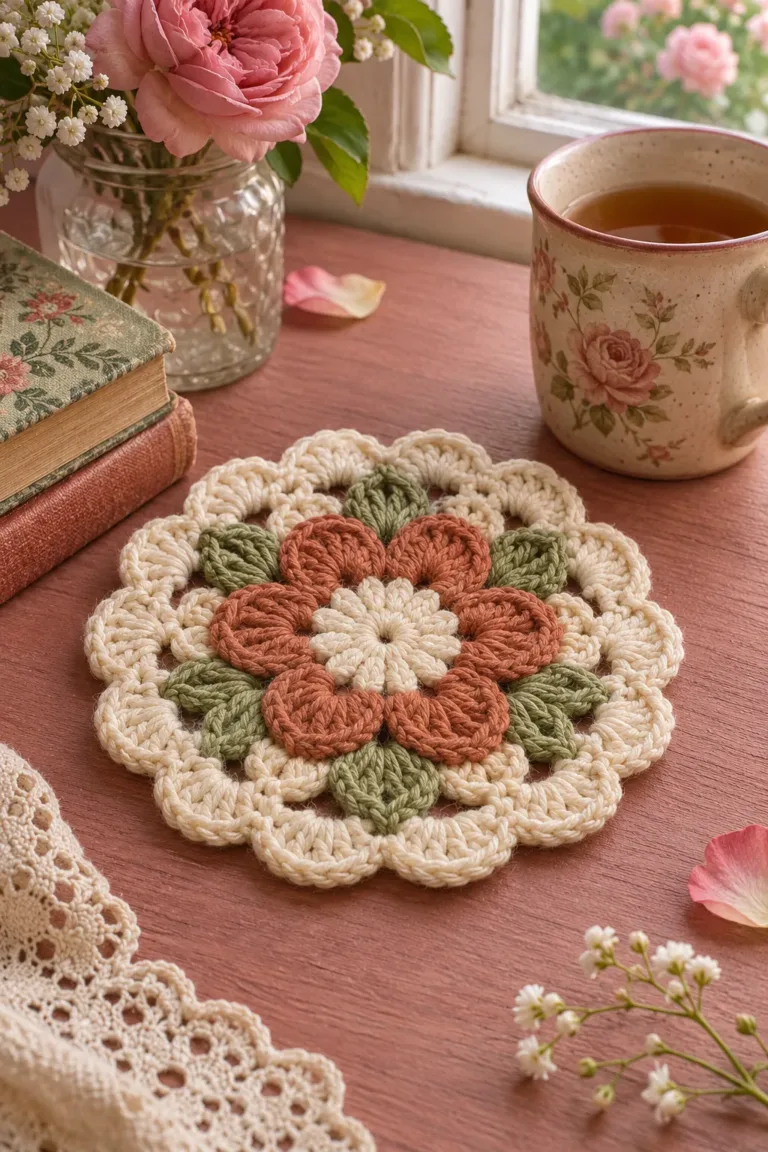
A flowering pillow works best when the eye can find one clear center. A large layered blossom creates that anchor, while smaller flowers and leaves can lead outward across the surrounding fabric. Think of the design as a garden border: the central bloom has the strongest presence, and supporting motifs repeat its shape without competing with it.
Color is an easy way to create this hierarchy. Keep the ground light and calm, then use two or three related pinks for petals and a muted green for leaves. Cream between motifs gives the stitches room to breathe. This approach makes a floral pillow easier to place beside a patterned chair, woven basket, or softly textured throw.
A pink ombre treatment adds movement while keeping the subject unified. Begin with deeper rose at the outer edge or flower center, then move toward blush and pale pink as the eye travels inward. The change does not need to be perfectly graduated; a few intentional value steps can make the texture dimensional and let the flower remain recognizable across the room.
Arrange peach flower granny squares for a lighter look
Granny squares offer a modular route to floral crochet pillow design. Each square can hold a peach flower and a pair of green leaves, with a pale background acting as the visual thread that joins the panels. Before joining, lay the squares on a table and rotate them until flowers feel evenly distributed rather than forming accidental clusters.
For a gentle cottage effect, repeat the same flower color while varying leaf placement or the order of surrounding rounds. A warm cream border can frame the whole cushion and make peach motifs look sunlit. If the pillow will sit near checks, stripes, or a floral chair, limit additional colors so the handmade pattern remains the most distinctive layer.
The advantage of squares is flexibility. You can test a smaller cushion, add a second row, or use the same motif on a companion piece without redesigning the entire surface. Pay attention to the joining line: a tidy consistent seam makes separate squares read as one composed textile, while a contrasting join can become a deliberate frame around each flower.
Style the finished pillow as part of the room
Once the crochet cover is complete, place it where its texture can be seen and touched. An armchair, window seat, or wicker bench gives a floral pillow enough visual space, while a nearby throw can repeat one quiet color without copying every motif. Let the handmade piece soften the setting rather than adding more decoration around it.
Scale matters when arranging several cushions. A strongly floral pillow can sit forward as the feature, with a plain cushion behind it and a folded throw below. This keeps the arrangement useful as well as pretty. A calm backdrop also helps the stitched flowers remain legible, especially when the yarn has raised petals, bobbles, or leafy relief.
Quick questions about floral crochet pillows
What colors work well for a flowering pillow?
Pink, peach, cream, and muted green create a soft garden palette that suits floral texture. Use a light ground when the motifs are detailed, then reserve the strongest shade for the flower center or outer frame. Repeating one small accent elsewhere in the room can make the pillow feel intentional.
Should every square use the same flower?
Repeating one flower keeps a modular pillow cohesive and makes planning easier. Small changes in leaf placement, border rounds, or color value can add rhythm without making the arrangement feel random. Lay out the completed squares before joining so the overall balance is visible.
Where should a decorative crochet pillow go?
Choose a seat or bench where the texture is visible and the colors can echo one nearby textile. A calm backdrop helps floral stitching remain the focal point. Avoid hiding a detailed front behind another cushion, since the raised motifs are part of the decorative effect.
Are floral crochet pillows difficult to style?
They are straightforward to style when the room repeats one or two colors from the pillow. Keep surrounding patterns quieter and allow handmade texture to provide the interest. A plain companion cushion can supply contrast without taking attention away from the flower arrangement.
Can granny-square motifs be used for more than one cushion?
Yes. A repeated flower-and-leaf square can become a coordinated set, provided the background and joining colors stay consistent. Changing the final border or cushion size is enough to create variety while preserving a recognizable family resemblance.
How can the pillow look balanced?
Plan the motif layout before joining, keep a clear focal area, and use a calm border to contain the colors and texture. Check the arrangement from a short distance as well as close up, because a balanced pattern should read clearly in both views.